
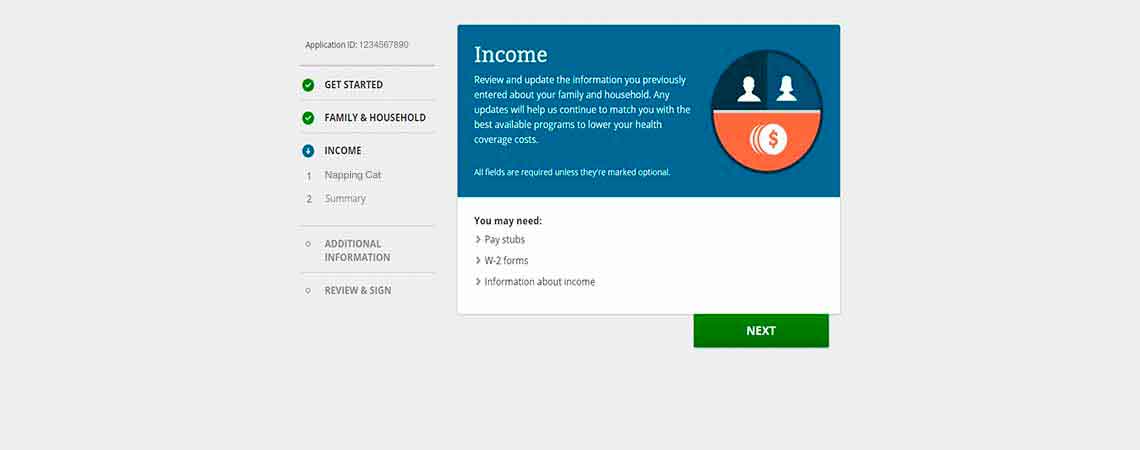
Income
What is your income?
Income is the key to qualifying for tax credits. If your income is too high, you won't qualify for help. If your income is very low, the system will automatically check whether you qualify for free or low-cost coverage through your state's Medicaid program instead.
How do you know how much you need? This isn't as hard as it may sound.
♦ The page Income - What Counts? goes into the details of income.
It's very important to understand what your income target needs to be. Too low, and you may not qualify for help in states that didn't expand Medicaid. Too high, above 400% of the poverty level, and you won't get any tax credits.
♦ Estimate carefully. Starting with 2026 coverage, if your income ends up higher than you estimated, you'll have to pay back all of the extra tax credit when you file your taxes.
♦ The page Tax Credits goes into details about the premium tax credit and income levels.
On that page, you'll find a Marketplace calculator at the very bottom.
It's provided courtesy of KFF (Kaiser Family Foundation). You can enter various situations and get an estimate of possible premium tax credits. If you enter some numbers in the calculator on our page and click submit, it takes you to KFF's site to see the results.
• The KFF calculator is a good tool for learning how close your household's income is to qualifying, or not qualifying, for premium tax credits.
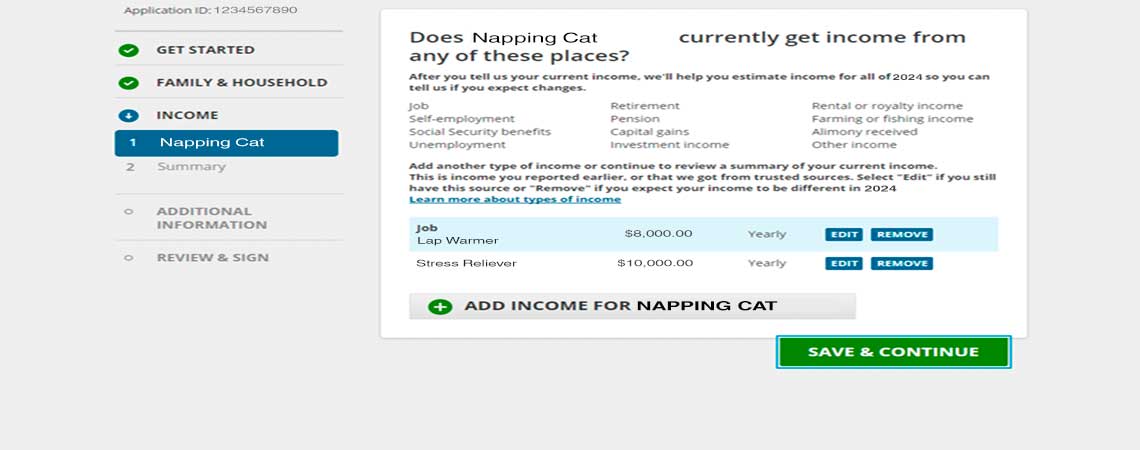
Income usually comes from a job. But income can also come from investments, like dividends and interest. Pensions and even Social Security count as income.
A good starting point is last year's taxes.
You'll need to report income for yourself, your spouse, and any dependents who are required to file a tax return. See Household Size for details.
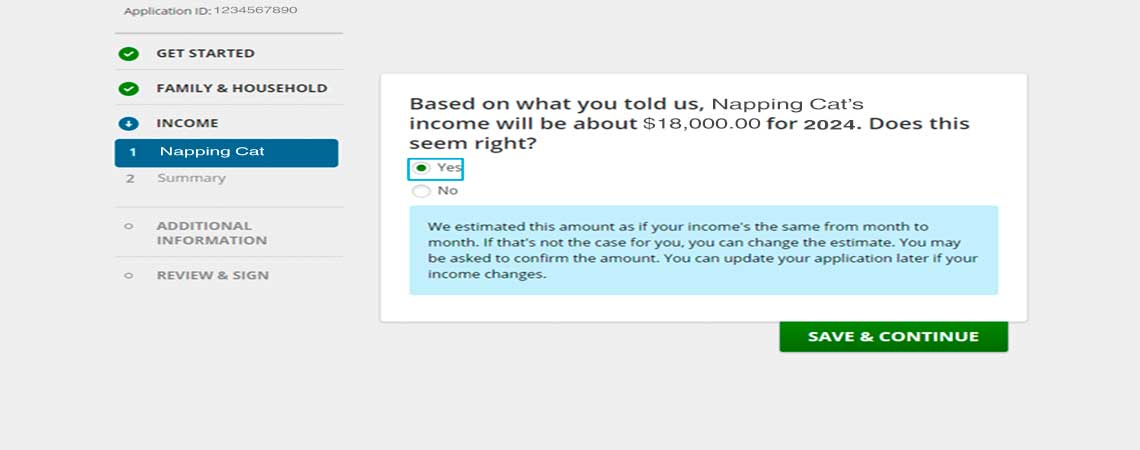
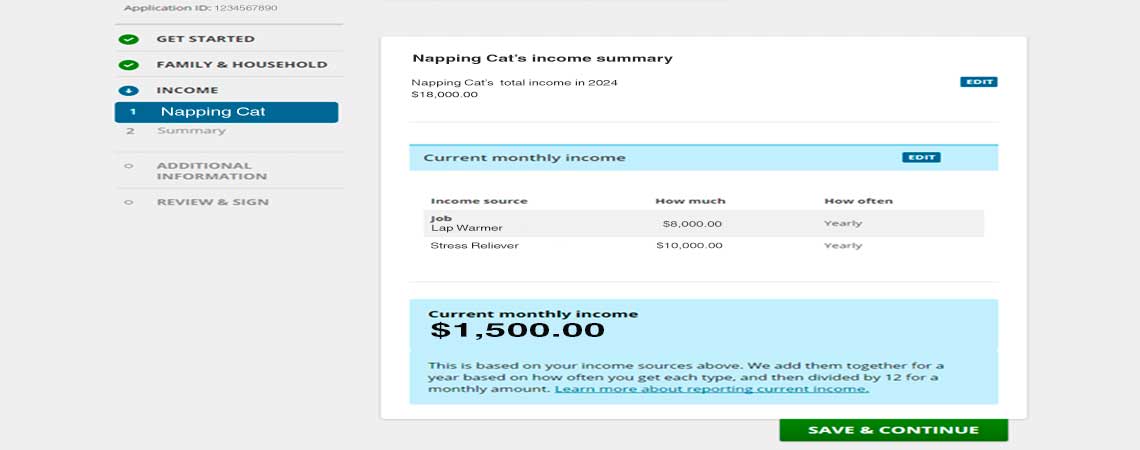
Income can be entered by the month or the year. When you're done entering income, the site will give you a total yearly income and an average monthly income. Review this number carefully to be sure it at least reaches the minimum amount for your household. For 2027 coverage, that's $15,960 for one person and $33,000 for a family of four (100% of the poverty level).
♦ If your estimated income falls below the minimum for tax credits, the system will check whether you qualify for Medicaid. However, if you live in a state that didn't expand Medicaid (like Texas or Florida) and find yourself in the "coverage gap," carefully review your income projections to make sure you're counting every legal source of income you expect next year.
